C hrysler ran an ad entitled So God Made a Farmer during the Superbowl in 2013 that was based on a speech Paul Harvey wrote and delivered in 1978. Harvey delivered the speech in his prototypical flat, folksy, pause-laden style, speaking iconically visual phrases, like… “God said, ‘I need somebody willing to sit up all night with a newborn colt. And watch it die. Then dry his eyes and say, ‘Maybe next year.’”
The speech, which was delivered live before the 1978 Future Farmers of America, had the presence of a live talk; you could hear and feel Harvey’s audience listening intently.
The visuals were straight-ahead still photos, taken by ten photographers, of farmers and farm life. There are two shots of Dodge trucks in the ad – only the last of which really calls much attention to its sponsor.
And, this is the point…
Dodge Ram collaborated with the National Future Farmers of America Foundation to produce the ad, receiving special permission from Paul Harvey’s company to use the speech. Dodge agreed to donate as much as $1,000,000 to the NFFA, based on views after the ad had initially run, at a rate of $100,000 per 1,000,000 million views. They reached the $1M cap in only five days.
You see, if you can really bring home the experience of something powerful that moves people and causes them to feel some way towards a product or a service, you might even transform their experience of your company and make a friend, if not for life, but for a very long time.
Looking back at some of the most moving and inspiring ads…
- Budweiser’s ad about a regular guy and his White Labrador Retriever, entitled Friends Are Waiting. The ad is terribly manipulative, and without spoiling anything if you’ve not seen it (unlikely), it racks up 10.8 million views in three days.
- Johnson & Johnson’s spot For All You Love weaves luminously photographed, black and white images into a verité-style spot about the things we hold as the most important: gorgeous babies being bathed with J&J products, children, pregnant women and their men, wise and weary older men and women – the people we cherish – those we love.
- Apple’s Think Different ad of 1998 – originally narrated by Steve Jobs, himself – the broadcast version was voiced by actor Richard Dreyfuss – was a simple spot made up of black and white editorial imagery. It showed clips of Albert Einstein, Bob Dylan, Martin Luther King, Jr., Richard Branson, John Lennon & Yoko Ono, Buckminster Fuller, Thomas Edison, Muhammad Ali, Ted Turner, Maria Callas, Mahatma Gandhi, Amelia Earhart & Bernt Balchen, Alfred Hitchcock, Martha Graham, Jim Henson, Frank Lloyd Wright, Pablo Picasso, and told the story of people who stood for something, often crazy ideas for which they were ridiculed or ignored. These people, “… the crazy ones…” Apple saw “… genius…” “Because the people who think they are crazy enough to think they can change the world… are the ones who do.” The ad was not only brilliant it was prescient. Steve Jobs returned to Apple in 1997 and not only turned the company around, he revolutionized the way we use computers and phones and invented tablets. He forever altered our relationship to computers and in the process, changed the world.
Even if you don’t have a product or service that you think has some powerful, emotional message, if you look at how your offering impacts those who use it…
- Assemble a piece that highlights your customers or your employees and how they feel about the issues important to the company
- Document an event, like a pro bono activity the company participates in: a 5K, a charity auction or something like that to demonstrate a commitment to a cause
- Find a way to use your firm’s products or services to address a problem or to make a difference in the world, like this brilliant example from GoPro.
The post Moved Customers Buy appeared first on Buller Media.
]]>The post Genre Video for Business: The Horror, the Horror appeared first on Buller Media.
]]> n a world over run by zombie businessmen….sorry I couldn’t resist starting a post that way. Everyone has seen horror films, fantasy movies, and sci-fi pictures and, even if you’re not a fan, you’ve endured them because a loved one or a date dragged you to the theater. To enjoy that genre of film you have to suspend your disbelief at some or all of it. Your logical mind just can’t cotton with gross aliens from outer space or guys from other planets with pointy, green ears or even your garden-variety ghost.
So, I’m going to ask that you suspend your disbelief when I suggest that you can use fictional genres in business video. Your first thoughts might be, “sounds expensive,” or “why in the name of Pete would anyone watch a business thriller?”
But think about it a bit more. How interesting would it be if the new dating website that you’re building had a series of short suspense films à la Alfred Hitchcock or David Fincher (Girl With the Dragon Tattoo and Gone Girl) in which a couple research one another on a hypothetically “badly built” dating website, chat back and forth, and then do what everyone does when they’re looking at going out with a new, potential partner: Google them. And, the video might continue with more online checking, in person snooping/spying, etc., a lot like the research the Girl With the Dragon Tattoo does in that film. And then it would conclude with a shot of a smiling woman sitting with her smartphone fiddling with your new dating website and the audio tag, “maybe there’s an easier way,” and then a shot of her meeting the guy at a restaurant. That’s clearly a lot more interesting than a promo piece that lists the features and benefits of the website.
The cardinal sin in any form of production is “don’t be dull!” You simply don’t want to bore your viewers with a lot of information or data, that while useful will not convey some experience and elicit some emotions. Wit, terror, embarrassment, grief are all examples of real, human feelings that can and should be employed to tell the story of your products and services.
Yeah, I know what you’re thinking… “it’s simply too risky… I might alienate my customers… I might look like a fool.” And we agree that in the absence of a clearly delineated statement of purpose or a value proposition or defined business objectives, the possibility of creating something that misses the mark is very real. But, a well-written piece that’s fun and captures the imagination will not only attract expected viewers, but do well with those who are not in your target market and that’s worth a great deal.
A bloody horror comedy video for your medical supply business, in which zombies keep coming into the emergency department looking for bandages? Sounds like a winner!
The post Genre Video for Business: The Horror, the Horror appeared first on Buller Media.
]]>The post Hyper-Focus: Video Content on the Head of a Pin appeared first on Buller Media.
]]> Particularly if you’re in a service or idea business in which the kinds of services or consulting you provide is dynamic, you ought to be taking advantage of a constantly changing field of data, knowledge, and insight, and telling your market about those things. It’s difficult to describe this without using a couple of examples.
If you’re a CPA, regardless of the size of your firm, your consulting changes constantly, because the law changes constantly; sometimes changes are subtle, sometimes they’re dramatic, but at least on a quarterly or semi-annual basis, there are practice amendments that might impact your client base. And, you might also have to constantly remind your clients to perform quarterly filing, update payroll information, and so forth.
I have seen CPA’s who send out email updates on a periodic basis. While informative, these updates are often very… um, dry. 😉 And, let’s face it, changes to tax law is not exactly riveting stuff, but it is important. So, why not make those updates and reminders more palatable by releasing them in the form of a talking head video?
If you choose to do something like this and embed the videos as links in emails, there are a few things you’ll want to do…
- K.I.S.S. – I know, it stands for Keep It Simple, Stupid! But here we’re calling it Keep It Short, Stupid! Don’t release a ten-minute video explaining the blow-by-blow of a new regulation – you’ll sound like Ben Stein teaching science in The Wonder Years! Cover the facts and then, if your audience needs additional information, refer them to a document they can click on below your video, after they’ve finished watching.
- If you’re going to put a link in an email, make sure it’s an actual frame from the video. If you don’t know how to do this, ask your social media or systems admin. You want any effort to look as professional as possible.
- Make it fun. Yes, I know you’re a CPA, you’re not supposed to be fun! You’re supposed to scare your clients into submission with your sage wisdom and warnings of impending tax-related doom. But, you can even have fun with bad news. In fact, it’s better to have fun with more difficult matters – conveying levity and calm in the face of challenge will leave your clients much more at ease.
- Even if you don’t have much to say at a particular interval, say something! Refresh your content on a regular basis and try not to deviate from that schedule – your clients will become accustomed to seeing regular updates from you.
- You don’t need to have a fancy, glossy highly produced video – but make sure you’re dressed professionally, cleanly shaven, if you’re a man, freshly applied makeup if you’re a woman. Your reputation is on the line, so make sure that you look the part.
Focusing your content like a laser beam on a particular market or group of customers helps build your brand and a strong bond between you and your customers. You’ll like that and so will they.
The post Hyper-Focus: Video Content on the Head of a Pin appeared first on Buller Media.
]]>The post Using Video to Create a Virtual Experience appeared first on Buller Media.
]]> There are some things that you just need to see or experience in order to fully appreciate them. Think about it for a moment…
- Adrenaline sports and leisure – skydiving, car racing, BASE-jumping, amusement park rides like roller coasters, go carts, Segway tours, bicycle vacations, water skiing, snowboarding, jungle zip line rides, your hip hop speed Klezmer band…
- New product demos – try to imagine what a Roomba did before you ever saw one in operation
- Unusual talents – blowing up balloons with your ears, squirting milk from your eyeballs, rifle twirling, yodeling, bicycling backwards down mountain roads
There are some things that really need to be experienced in order to fully appreciated and understood. And, nothing captures an experience quite as effectively as a video.
And, depending upon what the experience is, it may be enough to simply show the thing you want others to experience, even in a simple way. For example, if you’ve created a new way to fold a t-shirt (there are lots of t-shirt folding videos on YouTube, by the way), you can probably capture the whole thing with your phone or another simple video camera. It doesn’t really need any production values and you don’t need a crew to produce it.
But, some experiences suffer from a lack of attention to detail and narrative, if they’re under-produced. In the world of fast-paced action – extreme sports and dynamic activities like those listed in the first bullet above – a depiction of those really suffer if they’re not giving the viewer a strong sense of movement, excitement, risk, and challenge. And, if there’s one tool that producers have in their quiver of toys that does more to create and capture those moments, it’s the GoPro camera.
Anyone can rush out and buy a GoPro – they’re about $400. You can buy ten of them and mount them all over your band’s (see above) drum kit, electric clarinet, accordion, and electric violin for a really fresh look at hip hop speed Klezmer.
However, you probably don’t have someone who can effectively edit your music video. You may not have a lighting director to make everyone look amazing from several angles, simultaneously. A lot of thinking and planning goes into the production of a music video. It’s not a casual undertaking.
If you have a new product – say a wet bar that also doubles as a tropical fish tank – you’re going to want a script and a storyboard to both show the product and offer your market a strong rationale for why they need to pick up the phone and order one.
- Everyone will want to party in your basement!
- Solo drinkers can pass the time by counting fish
- Impress your boss
- Those who pass out on the bar bring new meaning to the expression, “sleeping with the fishes.”
And, there is a broad range of techniques and effects the producer can bring to bear to make the experience more immersive…
- Slow motion
- Animation
- Fast motion
- Split screens
- Graphic and text overlays on live video
- Isolated elements through selective sharpening and blurring
- Zooming into a shot to single something out
- Titles and subtitles
The net result is that viewers really get to fully experience something in a way they’ve done before and if you can successfully gain their curiosity, you have the opportunity to land them as a customer, too.
The post Using Video to Create a Virtual Experience appeared first on Buller Media.
]]>The post The First 15 Seconds are Essential appeared first on Buller Media.
]]> So there you are sitting in front of your Google Analytics, checking out the number of views on the video you’ve recently uploaded to YouTube and have linked to your website. The number of views is pretty good! But, you look a little closer and see that the average view duration drops off severely at around 15 seconds! So no one is really watching your video past a few seconds! You think, “How much did I spend on it?!”
Let’s face it, humans have the attention spans of gnats. If you’re in your mid-forties or younger, you either grew up watching Sesame Street or MTV or both, and you were introduced to a significantly higher velocity of visual depictions of concepts, facts, and interpretations, not to mention all of the visual and auditory information that came with it: colors, music, sound effects, funny voices, cameras that moved quickly, fast editing, and so on.
As technology crept its way into our lives with newer ways and devices with which we communicate, we adapted to more sophisticated and rapid forms of interaction – simply because we had no choice – adapt or be excluded.
Philosopher Marshall McLuhan, famous for his book The Medium is the Massage – which distinguished the notion that ideas or messages (the massage) are inseparable from the way in which they’re transmitted (textually, aurally, visually) – proposed the idea that the expression of something moved from being generally accepted to commonplace, in his 1970 book, From Cliché to Archetype.
If you watch a film made up until about 1995 to 2000, what you’re seeing is something that appears to move at a snail’s pace compared to what you expect when you see a movie made more recently. The reasons are numerous:
- The phenomenon of Sesame Street/MTV: humans have very sophisticated visual and auditory palettes that require much less information for comprehension and context.
- Smaller, lighter-weight digital cameras allow for greater movement and longer camera shots and simply, more shots can be made in a day. When heavier film cameras were used, productions could count on between 2-3 pages/day. Depending upon the complexity of the production, the expectation is that many more pages, with much more complicated setups can be completed in much less time.
- Long static periods bore us. We have become action junkies.
As well, time has become compressed. Watch an episode of Mad Men and it’s difficult to believe how much time everyone had to get things done and how much time they did nothing at work: drinking, napping, long lunches, etc. Today, you’re lucky if you can shove a Subway in your face while inputting data for the TPS report.
So, armed with that knowledge, it’s easy to understand why the first few seconds of a video have got to be as compelling as watching the opening shot of an action film. You really have to find a way to wrest the viewer’s attention away from the myriad of other things they’ve got to do.
And then, as John Cusack’s character Rob says in the 2000 relationship masterpiece High Fidelity , about making a mix tape for girl, “You gotta kick off with a killer, to grab attention. Then you got to take it up a notch…” You can’t leave the viewer hanging with your amazing opening without creating the next moment like it’s a tractor beam mesmerizing the viewer. Then and only then can you begin to deliver the content you wanted to impart. But for the viewer, escape is always on the horizon. Your job is to continually tease or taunt them to stay up until the last frame.
In essence, you have two jobs:
- Nail them and keep them
- Deliver your message
Those two tasks are related, but don’t make the mistake of assuming that one will eliminate the need for the other. If you can do that, your expensive video will have much higher numbers of views and longer views, too.
And, as always, if you can’t figure out how to do this yourself: hire a professional. It’ll be cheaper in the long run.
The post The First 15 Seconds are Essential appeared first on Buller Media.
]]>The post 4K: Do I really need more K’s? (Part 2 of 2) appeared first on Buller Media.
]]>The first time I saw an Ultra High Definition (UHD) television screen (or maybe it was true 4K, I don’t recall) it was next to a 2K screen. I looked really carefully at both screens. The UHD screen was a bit sharper, but I can’t say that I was overwhelmed by the difference. That was in 2013 at the National Association of Broadcasting Show (NAB) when UHD was brand new. It’s possible that the source signal was actually only 2K, so the differences between the two pictures were not as pronounced as they otherwise might have been.
Drop on by your local electronics retailer and spend some time looking at new TVs and you will see marked differences between HD and UHD screens. UHD TVs are definitely sharper and newer screen technologies like IPS (In-Plane Switching – a variation on LCD flat panels) and OLED (Organic Light Emitting Diode – better blacks and higher contrast ratio) make for better blacks, color reproduction, and easier to watch off-axis (on an angle).
But do you actually need a 4K television? Well, the simple answer is maybe, but it really depends on the size of the television and your viewing distance? Why? It’s because your eye has finite resolution. To test this theory, look as something detailed up close (like a fine-grained pattern in a piece of fabric – yes, your bedspread is fine) and then look at it from a distance. You can see the pattern close up and you can’t at a distance. Your vision is finite. If you look at the below chart, produced by CarltonBale.com, you can see that different resolutions are viewing-distance dependent. If you need a big screen because the viewing distance is greater, than perhaps a UHD television makes sense for you.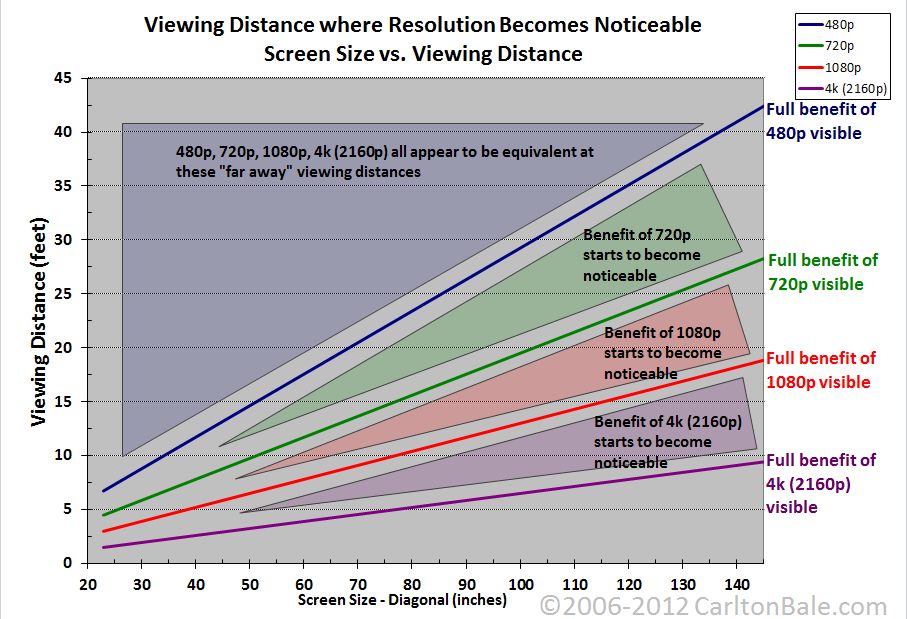
The other thing to consider is the source. There are few broadcast 4K channels right now. DirecTV has some media being beamed in 4K, Netflix supports UHD media, but for that you need an Internet connection capable of download speeds of 25mbps or higher and that’s often expensive and simply not available. Blue-Ray will support UHD in the future, as well. Even though all of these various sources may not be native UHD right now, they are on the way.
UHD TVs are sharper. Yes, you really can see the puck or the golf ball, better. If that’s something that’s important to you then get on down to the store and pick up one of those bad boys! So it seems that in some cases – based mostly on viewing distance – UHD TVs make sense. However, eventually all new televisions will be UHD, so if you’re in the market to buy a new TV, chances are that UHD is the way to go.
What about cameras and capturing media?
Does is make sense to capture video in 4K? Is that a big deal? Is that happening now? It may be that 4K is a better capture medium than a display medium for several reasons. And, by the way, here I reference the term 4K, as opposed to UHD. 4K is a capture resolution and UHD is display resolution.
The camera conversation is essentially the same as the television conversation. 4K is about four times as much detail as 2K. If you’re producing sports and you really want to see where the ball was downed, which car nosed out the other, or who tipped the ball out of bounds, detail is critically important. If you’re emulating a French New Wave film and you want the picture to look grainy and soft, you might not choose to shoot in 4K. Maybe.
Some of the advantages to 4K capture, include:
- The more pixels you have, the easier it is in post-production to enlarge a section of a frame. This means that if a shot was handheld and the camera operator had a bit too much Red Bull at lunch (and the shot is kind of shaky), an editor can post-stabilize the shot and lose some its periphery without losing any detail.
- The higher the signal-to-noise ratio that may be captured in a frame provides greater discretion and choice to manipulate the image during editing or color correction. In other words, you have an image (it’s really data, folks!) that is rich in information and the more information you have, the more you can exploit and manipulate it.
A major disadvantage is that 4K simply takes up more storage space – four times as much as 2K. An hour of 2K material is about 25GB, while an hour of 4K media is nearly 100GB! Yeah, you’re going to need a lot of drive space.
4K is simply not a chimera. It’s not going to provide you an answer to all your capture and display needs. Yes the pictures are gorgeous, but there are downsides. However for some purposes, it may be a very useful tool in your video production tool kit.
The post 4K: Do I really need more K’s? (Part 2 of 2) appeared first on Buller Media.
]]>The post 4K: Do I really need more K’s? (Part 1 of 2) appeared first on Buller Media.
]]>Remember when you didn’t own a smartphone? You didn’t know you needed one, did you? But now you can’t imagine what life would be like without the confounded thing, right? Yes, I know there are a few readers of this blog who’ll claim not to own a smartphone – you’re still walking around with flip phones and happy to declare yourselves Luddites. I’m still talking to you folks, too.
Tech manufacturers love to invent new things you never knew you needed to buy. That really is the business they’re in; it’s not directly about satisfying customer needs or addressing things about existing products that don’t work well. Certainly, those concerns are valid, but they’re often secondary to creating or being early-to-market with the newest, latest, and greatest thing. Sometimes in makes sense, sometimes not. Remember 3D TV? Such as it is with video production.
In 2010, the U.S. shut down analog broadcast forever, ushering in an age of Digital Video Broadcasting and transforming every aspect of how video is captured, post-processed and disseminated. Broadcast pictures were now as bright and as sharp as those projected on a movie theater screen making television-watching that much better an experience. If you’re a hockey or golf fan, perhaps this was the first time on television that you could clearly see the ball or the puck. DVB is a High Definition standard, broadcasting images four times more detailed than the outmoded analog system it replaced. Without getting into the nitty-gritty differences between interlaced and progressive capture and broadcast, we can simply say that the pictures are a whole lot easier to watch: brighter, sharper, and more detailed. Yay.
And, to celebrate this victory over the past fuzzy, corpulent picture tube TVs you’ve owned, you went out and bought yourself a flat screen! Maybe your first new one was a plasma display or maybe it was a LCD screen. Of course if you’ve bought a television recently, the screen might be LED or IPS or…
Have you noticed that manufacturers are delighted to have you rush out to buy something new! Why do you think the Superbowl exists? Do you really think it’s because the National Football League wants to see who has the best team at the end of the season? Well, sure that’s part of it, but wouldn’t it be great if you threw a party and bought your favorite team’s apparel and food at the grocery store and a new TV and watched all the ads and bought those products, too and on and on? Of course, that’s what everyone wants! BUY MORE STUFF!
That’s a really long, but I think essential, preamble to the question of whether or not you need to watch or produce in 4K.
What is 4K anyway? Native 2K is 2048 pixels by 1080 pixels, but is more often known as High Definition and that’s 1920 x 1080. 4K is 4096 x 2160, but for consumers, manufacturers have settled on a standard called Ultra High Definition, which is 3840 x 2160. The differences relate to things like Aspect Ratio, but don’t sweat the small stuff, here.
On a screen no larger than about 50”, 2K pictures look pretty good, pretty sharp. Mind you, we’re talking about a video screen and not a computer monitor. Computer screens always benefit from being as razor sharp as you can get, because you’re working with letters and numbers and you want it to be as sharp as possible, otherwise you’re going to fatigue more easily.
But, do you need 4K and beyond for capturing and viewing video? And what does all this have to do with a chimera?
Find out in Part II!
The post 4K: Do I really need more K’s? (Part 1 of 2) appeared first on Buller Media.
]]>The post Consider the Equipment appeared first on Buller Media.
]]>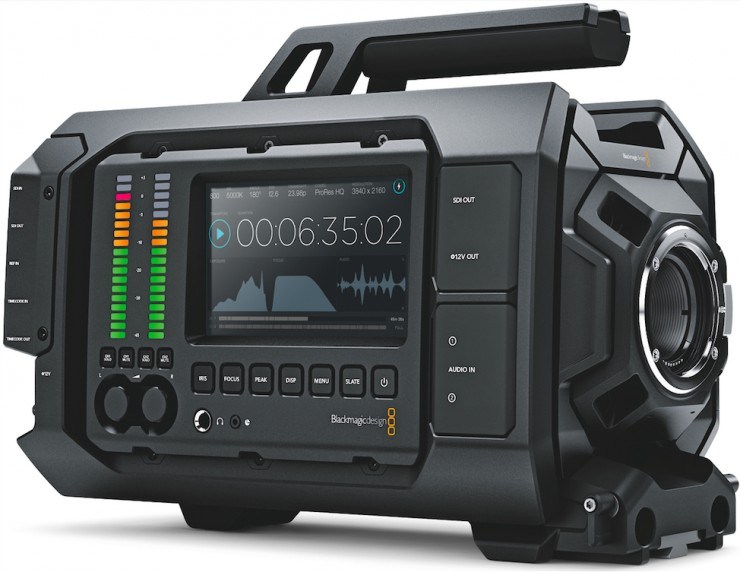 Black Magic Design recently released a firmware upgrade to it’s Ursa Camera that allows 150fps recording in HD, use of Apple’s new ProRes 4:4:4 XQ in HD & 4k and support for a new 4k sensor upgrade. The Ursa is known for being the world’s first user upgradable 4k camera. Among other features, a crucial one is the price point starting at $5,995.00 for the EF mount Ursa. It is a truly professional camera with a global shutter. The global shutter allows for clean, motion capturing and warp-free recording. Unlike other brands on the market it is definitely the best bang for your buck when it comes to recording DCP or professional broadcast material.
Some may argue that Black Magic Design is too new to the digital camera arena to create a camera that would be able to compete with existing manufacturers I would definitely disagree. Having worked with Canon, Panasonic and Sony Professional cameras this particular model is on par with best cameras out there as far as ergonomics and professional features go. 4k recording for digital projection being one of the key reasons to purchase the Ursa, allowing producers & motion graphics artists the ability to shoot special effects on a 4k canvas in either RAW or Pro Res 4:4:4. Shooting in these robust codecs allows for a lot of flexibility in post, such as resizing and rescaling, color grading or green screen effects/elements. If your end goal is an HD output those features are magnified at least twice the color resolution and 4x the digital zoom before ever seeing any loss in picture resolution. The Ursa can also shoot up to 150 fps in HD(with the new firmware upgrade) you can create some amazing slo-motion effects, making this camera a motion graphic artists dream.
Having a global shutter puts this camera a step above economy based 4k cameras like the GH-4. A global shutter makes sure that every frame you record is a snap shot of the scene and not a continuous scan like other cameras that use a rolling shutter. The problem with a rolling shutter is that it can create unwanted artifacts, such as distorted motion or a latent image capture. An example of this would be shooting a car chase scene and having the vehicles drive across the screen while the camera pans across the action, upon review of the footage you may see a warped blurred car going across a slanted image that simply looks like it was shot on a cell phone camera. Another such example would be recording a shoot out, the camera can be on a tripod, do to the fact the image is scanned on a rolling shutter, the recording might only capture half of a gunshot flash. A global shutter fixes this with simultaneous capture of the whole sensors image.
These are just some of the key reasons you would want to produce or have your next project shot on the Ursa camera. It is definitely an economical camera in terms of quality, you’re getting picture quality that is on par with best Hollywood productions. And if you’re shooting for broadcast television no camera on the market comes close in value.
For more information, hop on over to: https://www.blackmagicdesign.com/products/blackmagicursa
And see for yourself why it’s worth it to shoot your next project with the URSA.
The post Consider the Equipment appeared first on Buller Media.
]]>The post Talking Heads appeared first on Buller Media.
]]>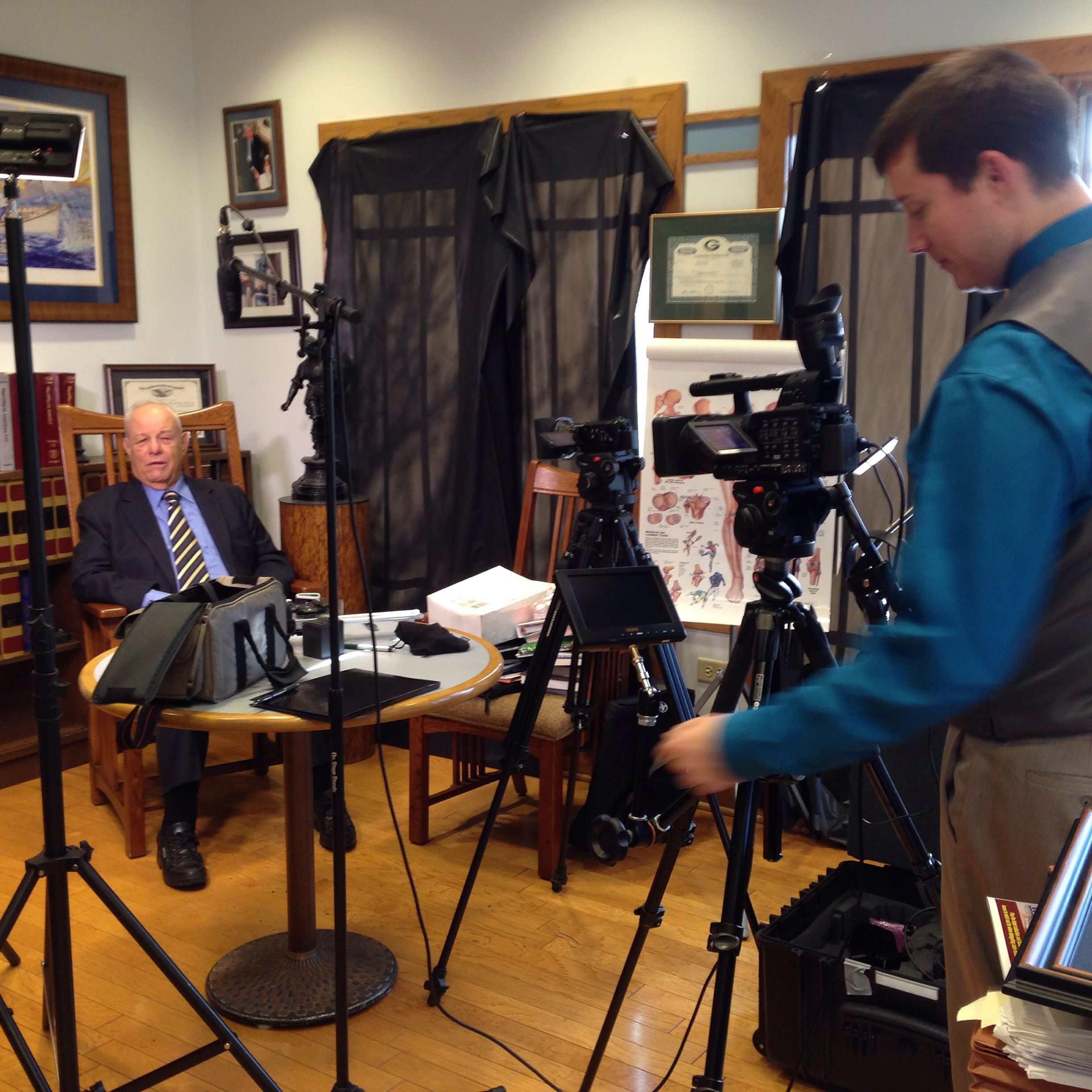 Interviews are…
- Essential for demonstrating expertise, delivering data, and revealing personality.
- Often boring.
- Too long.
- The reason I click off a video.
- A necessary evil.
- All of the above.
Of course you chose “E,” right?
When you think about all the interviews you’ve seen on television: talk shows, news broadcasts or on online media… it’s a lot! Let’s face it, interviews are here to stay – they’re often really useful – but can we make them more watchable? Yes. Here’s how:
- Try to come up with questions that no one’s ever asked the interviewee, before. You probably think, “… exactly how do I do that, smarty pants?” Well, it’s best to do your homework before the interview. You really want to know as much as you can about subject, whether they’re a businessperson who’s trying to expand her company’s marketing outreach or he’s an author or she’s an athlete.
The more you know about your subject, the more opportunity you have to get personal or relate something they do professionally to a hobby, their family, or some area of their life that might not naturally come up in a business context.
For example, say you’re speaking with a CEO of a manufacturing company, but you might ask about his passion for cars and how that pursuit translates to his role and his company. The worst outcome is that you hear nothing new or interesting – and that’s okay – make sure you have several areas of interest, so that you can continue to ask more atypical questions.
- Don’t wing it! Prepare more questions than you think you’re going to need. You really won’t know how long the interviewee’s answers are going to take. You might be surprised and finish the interview in far less time than you expected it to take and not have enough quality material to edit. Remember not to box yourself in by asking any questions that may be answered with a yes or no response (close-ended questions), always ask open ended questions that offer the interviewee a chance to expound and explore.
- Take notes as you go and be prepared to ask follow-on questions in the moment, based on your subject’s responses. Sometime these conversational tangents capture the interviewee’s most interesting and revealing characteristics. In other words, you never know what you’re going to get so take a risk and go down dark and dead-end alleys.
- Try to elicit as many facts, figures, data, and findings as possible from your subjects. These bits of information provide innumerable rich detail from which aspects of an interview may be tailored. Additionally these facts can be backed with motion graphics, rich and compelling visual counterpoints, to make a more visually appealing interview.
- Don’t bully your subject, but be prepared to ask difficult and sometimes even mildly confronting questions. Why? You want your subject to be as frank and authentic as they can possibly be, and if they’re reserved or they deliver surface answers, you are going to need to probe more deeply. Otherwise you risk having them say nothing of substance. There is nothing duller than a talking head that speaks in generalities and pleasantries. No one wants to take her or his precious time to watch someone who politely says nothing.
- Make the environment as pleasant and quiet as possible. It’s often best to shoot an interview at the subject’s place of business or somewhere familiar where they’re going to be comfortable.
Be professional, but don’t be stiff. You’ve got to establish rapport with your subject long before the camera rolls. She or he has got to trust you, so you need to be open and friendly and vulnerable.
If there are a lot of people hanging around just watching and not actively doing something (recording sound, running the camera, etc.) politely kick them out. A nervous or anxious subject is not going to give you a very good interview. Make sure everyone is quiet and respectful. Crew should solely focus on their jobs and not interject anything at all.
As an interviewer it’s your job to draw the very best out of your subject. Do your homework, bring a light and open attitude to the location, listen and follow your instincts. If you hear a question that must be asked, write it down and ask it! Don’t miss the opportunity. If you do all of these things, you’re going to have some good material to edit and people really will want to watch another talking head.
The post Talking Heads appeared first on Buller Media.
]]>The post Taking Stock: To buy or not to buy appeared first on Buller Media.
]]> But you see this guy and attractive women everywhere on websites, in ads, and brochures and the thing is… it’s really inauthentic, but it’s certainly cheap. Royalty free, stock images costs as little as a couple of dollars and as much as about $10 per image depending upon how they’re purchased, (blocks of credits vs. unlimited monthly or annual subscriptions) providing the buyer with a nearly limitless collection of media.
tock is not just stills, either. There are stock illustrations created with Illustrator and others, 2 and 3D animations created in programs like After Effects and Cinema 4D, video clips and music. The stock media world is oversaturated with every type of contrivance and mimicry imaginable. Need a shot of a farmer milking a cow? Done. How about a happy factory worker holding a hoist control? Yes. How about a suited tech in a clean room examining a wafer of components? Several choices. But is it prudent to use stock media? It depends.
There are actually two basic types of stock: royalty-free and editorial. Royalty free stock is what we’ve been talking about for this entire post; it’s often very generic and inexpensive and in most cases once you’ve paid to use it you can keep using it forever and anywhere (advertising, promotional, informational, educational) you’d like. Royalty free media is usually created by artists to be used specifically as stock media. Thorough artists have models and locations owners sign releases to waive their rights to the images. In turn the photographers, visual artists, filmmakers, and others who created them, own their work. There is a lot of duplication in this market and because the images look generic, prices are usually quite low.
Then there are editorial images. Editorial means that they have newsworthy value. In other words, a photograph of a political figure or a celebrity milking that cow is going to be a lot more interesting than a photo of that generic farmer. Photos of actual news events: press conferences, war-related, club-hopping celebrities, indicted criminals walking into court, etc. are considered editorial. And, that means that they’re going to cost substantially more than their royalty-free counterparts – possibly hundreds or even thousands of dollars more, depending upon how they’re used. Often, these media may only be licensed for one-time use or one-time plus one-place use.
It sounds like royalty free stock is a waste of time, doesn’t it? Not entirely. If you have the time to search carefully, you can actually find some stock images that look real and spontaneous. Another way to use royalty free stock is as a placeholder to temporarily stand in for what you will ultimately use, a custom image or clip. Placeholders offer various stakeholders the opportunity to view a work-in-progress with a pretty good idea of how it’s ultimately going to come out.
Stock images will save time and expense, but will cost you in terms of authenticity. Most of the time, they’re simply too fake and generic looking. It’s usually always best to go with the real deal.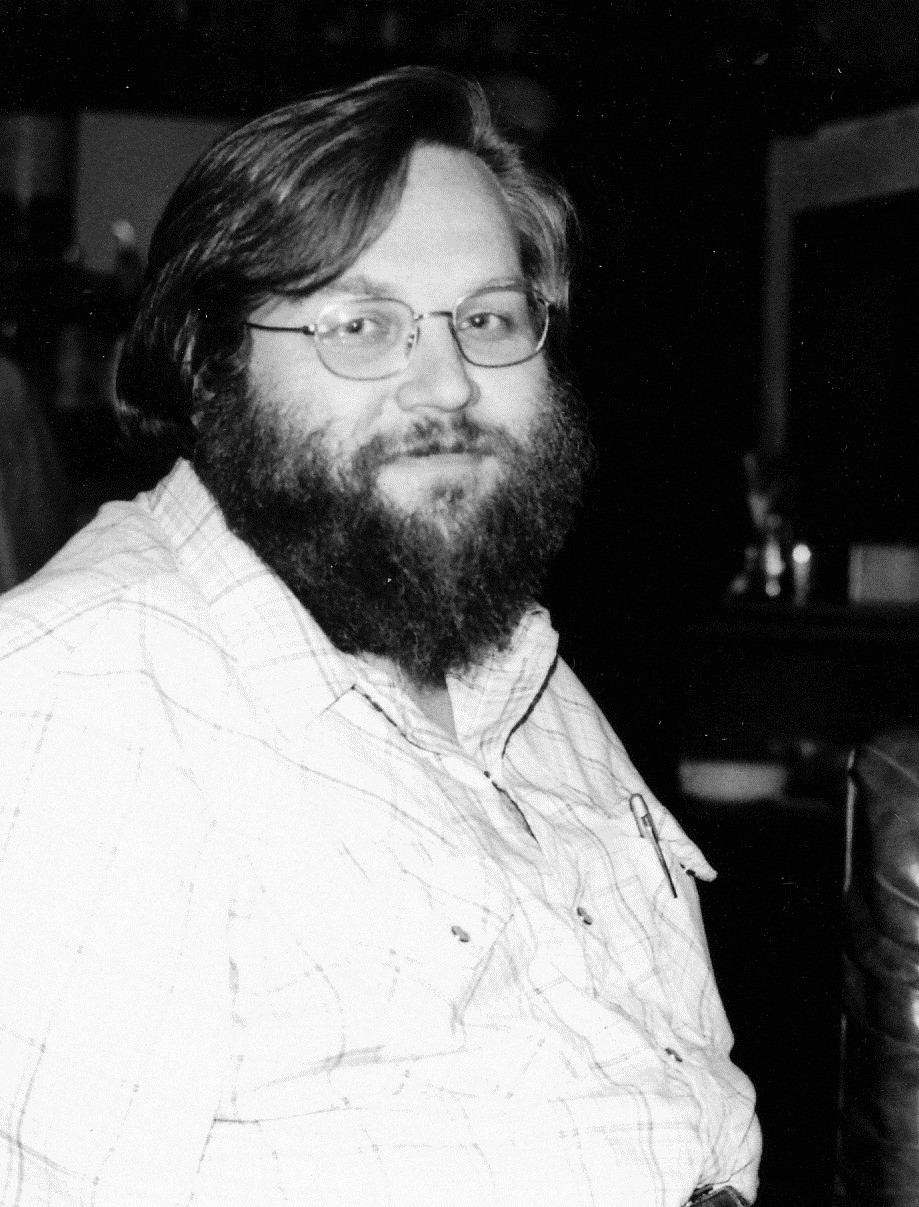
Actual software engineer.
The post Taking Stock: To buy or not to buy appeared first on Buller Media.
]]>